Barrett’s Esophagus: Causes, Symptoms, and Treatment
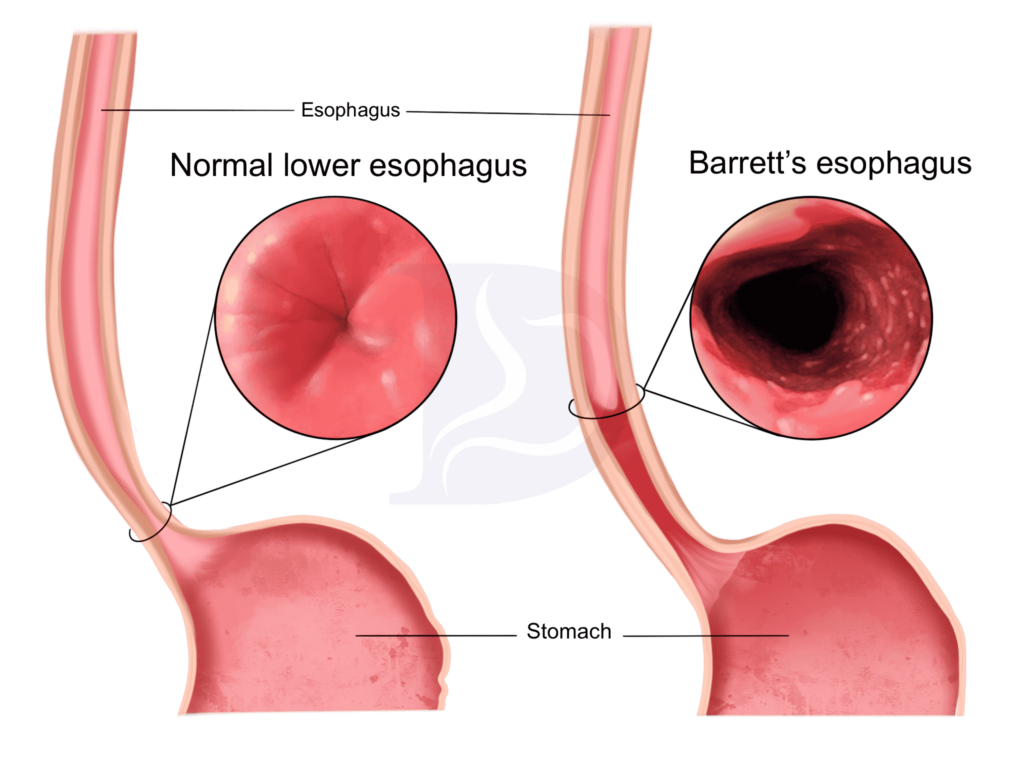
Barrett’s esophagus is a condition in which the lining of your esophagus (the tube that carries food from your mouth to your stomach) changes after long-term damage from stomach acid. Most people with it never develop cancer, but it raises the risk, so doctors watch it closely. In this detailed guide, you will learn what causes Barrett’s esophagus, who is at risk, how doctors diagnose and treat it, and what you can do at home. What Is Barrett’s Esophagus? Chronic gastroesophageal reflux disease (GERD) is the main cause. Stomach acid flows back into the esophagus and damages its lining. Over time, the damaged cells change and start to look like the cells of the intestine. This change is called intestinal metaplasia. The new cells resist acid better than normal esophageal cells, but they are abnormal. Barrett’s esophagus raises the risk of esophageal adenocarcinoma, a cancer that starts in gland cells. The risk remains low. Studies suggest that fewer than 1 in 100 people with Barrett’s esophagus develop cancer each year, and the risk is lower in people without dysplasia. What Are the Stages of Barrett’s Esophagus? Doctors describe the cells under the microscope: Causes of Barrett’s Esophagus Doctors do not know why only some people with GERD develop Barrett’s esophagus. These factors play a role: Risk Factors Symptoms Many people have no symptoms of Barrett’s esophagus itself. They usually have the symptoms of GERD: Some people have no heartburn at all, so doctors screen those with several risk factors. Warning Signs of Cancer See a doctor right away if you have trouble swallowing, pain when swallowing, weight loss without trying, repeated vomiting, or black stools. Who Should Be Screened? Doctors may suggest a screening endoscopy for people who have had chronic GERD for more than five years and have several risk factors, for example men over 50 who are overweight, smoke, or have a family history of esophageal cancer. How Doctors Diagnose It Treatment Treatment depends on whether the cells show dysplasia. Acid-Reducing Medicines Proton pump inhibitors (PPIs) lower stomach acid and let the esophagus heal. They include omeprazole, lansoprazole, pantoprazole, rabeprazole, esomeprazole, and dexlansoprazole. Most people with Barrett’s esophagus take a PPI long term, because it controls reflux and may lower the cancer risk. Regular Monitoring If you have no dysplasia, your doctor will repeat the endoscopy every three to five years to watch for changes. If you have low-grade dysplasia, checks are more frequent, usually every six to twelve months. Procedures for Abnormal Cells Lifestyle Tips Can Barrett’s Esophagus Go Away? The changed cells usually remain, even with treatment. Controlling acid can stop the condition from getting worse, and procedures can remove abnormal cells. Regular check-ups remain important. Living With Barrett’s Esophagus Most people with Barrett’s esophagus live normal lives. Take your PPI as prescribed, keep your endoscopy appointments, and report new symptoms. Do not stop your medicine without talking to your doctor, because acid reflux can return quickly. Questions to Ask Your Doctor Understanding GERD and Why It Matters GERD happens when the muscle at the bottom of the esophagus relaxes too often and lets stomach acid flow upward. Occasional heartburn is normal. Heartburn that happens two or more times a week, or that wakes you at night, is a sign of GERD. Treating GERD early lowers the risk of damage, including Barrett’s esophagus. Barrett’s Esophagus, GERD, and Esophageal Cancer Regular endoscopy lets doctors find and treat changes before they become cancer. Foods That Help and Foods That Trigger Reflux Triggers differ from person to person, so use a diary. In general: Anti-Reflux Surgery If medicines do not control reflux, or if you do not want to take them for life, a surgeon can strengthen the valve between the esophagus and stomach. Surgery controls reflux but does not remove the need for regular endoscopy if you have Barrett’s esophagus. Medicines to Discuss With Your Doctor Some medicines can irritate the esophagus or relax the valve. Ask your doctor about: Take tablets with a full glass of water and stay upright for 30 minutes. Emotional Well-Being Hearing the word “precancerous” can cause worry. Remember that most people with Barrett’s esophagus never develop cancer, and that regular checks give you the best protection. If worry affects your sleep or daily life, talk to your doctor or a counselor. Should Family Members Be Tested? If a close relative, such as a parent or sibling, has Barrett’s esophagus or esophageal cancer, tell your doctor. They may advise screening, especially if you also have chronic reflux. Key Takeaways Frequently Asked Questions Is Barrett’s esophagus cancer? No. It is a precancerous change. Most people never develop cancer. Can Barrett’s esophagus be cured? Procedures can remove abnormal cells, but the risk can return, so you still need check-ups. Does Barrett’s esophagus cause pain? It does not cause pain by itself. GERD symptoms, such as heartburn, are common. How often do I need an endoscopy? Usually every three to five years if there is no dysplasia. Your doctor will decide. Can diet help? Healthy habits can lower reflux, but you still need medical care. Disclaimer: This article is for information only. It is not medical advice. Please talk to your doctor about your own health.
Barrett’s Esophagus: Causes, Symptoms, and Treatment Read More »