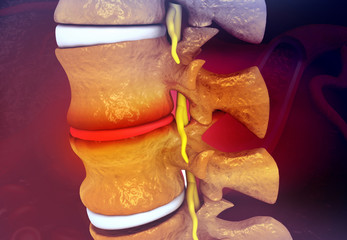
Disc Slip Disease
Back pain is a common problem in people of all ages. One major reason for back pain is disc slip disease, also called a slipped disc. This condition can cause pain in the back, neck, arms, or legs. In some cases, it can also cause numbness and weakness. To understand disc slip disease properly, we should first understand what a disc is, how it works, and what happens when it gets damaged. What Is a Disc? A disc is a soft pad made of cartilage that lies between two spine bones. These spine bones are called vertebrae. The spine is made of many vertebrae stacked on top of each other. Between each pair of vertebrae, there is a disc. This disc acts like a cushion and keeps the bones from rubbing against each other. A disc also helps the spine move smoothly and flexibly. Parts of a Disc A spinal disc has two main parts. Annulus Fibrosus (Outer Part) The annulus fibrosus is the strong outer layer of the disc. It is made of tough fibrous tissue. This outer part holds the disc together and protects the inner part. Nucleus Pulposus (Inner Part) The nucleus pulposus is the soft, jelly-like center of the disc. It contains water and gel material. This inner part gives the disc flexibility and helps it absorb pressure. Function of a Disc A disc performs many important functions in the body. It acts as a shock absorber during walking, running, jumping, and lifting. It supports body weight and reduces pressure on the spine. It helps the spine bend, twist, and move smoothly. It maintains proper space between vertebrae so nerves can function normally. It protects the spinal cord and nearby nerves from damage. Without discs, the spine would become stiff, painful, and weak. What Is Disc Slip Disease? Disc slip disease does not mean the disc slips out of place. In reality, disc slip happens when the outer ring, called annulus fibrosus, becomes weak or develops a crack. The inner jelly, called nucleus pulposus, pushes out through the crack. The leaked jelly presses on nearby nerves and this nerve pressure causes pain, numbness, and weakness. This condition is known as disc slip disease. It is also called a herniated disc, bulging disc, or ruptured disc. Where Does Disc Slip Disease Occur? Disc slip disease can occur in any part of the spine, but it mostly happens in the lower back, which is called the lumbar spine. This is the most common area because the lower back carries most body weight and faces daily stress. Disc slip can also occur in the neck, called the cervical spine. Disc slip in the neck can cause pain that spreads to the shoulders, arms, and hands. Disc slip in the upper back, called the thoracic spine, is rare because the upper back does not move much compared to the lower back and neck. Causes of Disc Slip Disease Disc slip disease happens when a disc becomes weak and cannot handle pressure. Aging is one of the main causes. As people grow older, discs lose water and become dry. A dry disc becomes less flexible and cracks easily. Loss of elasticity also increases risk because discs cannot absorb pressure properly. Disc degeneration is another cause, where the disc wears out due to repeated stress, poor posture, and daily pressure. Overweight and obesity increase pressure on the spine, especially in the lower back. Lifting heavy objects in the wrong way is also a major cause because it puts sudden force on the disc. Poor posture slowly damages the spine and increases disc stress. Sitting for long hours increases pressure on the lower spine and weakens discs. Sudden injury or accident can damage the disc quickly and cause rupture. Weak back and core muscles also increase pressure on discs. Smoking reduces oxygen and blood supply to discs and increases degeneration. Genetic factors also play a role because some people naturally have weaker discs. Symptoms of Disc Slip Disease Symptoms depend on which disc gets damaged and which nerve gets pressed. Back pain or neck pain is usually the first symptom. Pain may start suddenly or slowly. Pain that spreads to arms or legs is a major sign of nerve pressure. If the disc slip is in the lower back, pain may spread to the buttocks, thighs, legs, and feet. If the disc slip is in the neck, pain may spread to the shoulders, arms, and fingers. Many people also feel numbness, tingling, pins and needles sensation, or burning feeling. Disc slip can also cause muscle weakness, such as weak grip in hands or weakness in legs. Pain often increases during walking, running, bending forward, lifting objects, standing too long, or sitting too long. Coughing or sneezing can also increase pain because it increases pressure inside the spine. Sciatica is a common symptom of lower back disc slip. It causes pain that travels from the lower back down the leg. It may feel sharp, burning, or like an electric shock. Some people also experience stiffness and reduced movement in the back. Serious Symptoms (Emergency Warning Signs) Some symptoms require urgent medical help. You should go to a hospital immediately if you experience loss of bladder control, loss of bowel control, numbness in the private area, severe weakness in both legs, or inability to walk properly. These signs may indicate serious nerve damage. How Doctors Diagnose Disc Slip Disease Doctors diagnose disc slip disease by checking symptoms and performing tests. A physical examination helps doctors check spine movement, pain location, muscle strength, reflexes, and sensation in arms and legs. Doctors may also perform the straight leg raise test for sciatica. X-rays do not show discs clearly, but they help detect fractures, arthritis, and bone alignment problems. MRI is the most accurate test for disc slip disease because it shows disc bulge, rupture, nerve compression, and disc degeneration. CT scan can also show disc problems if MRI is not possible. Doctors may use nerve tests